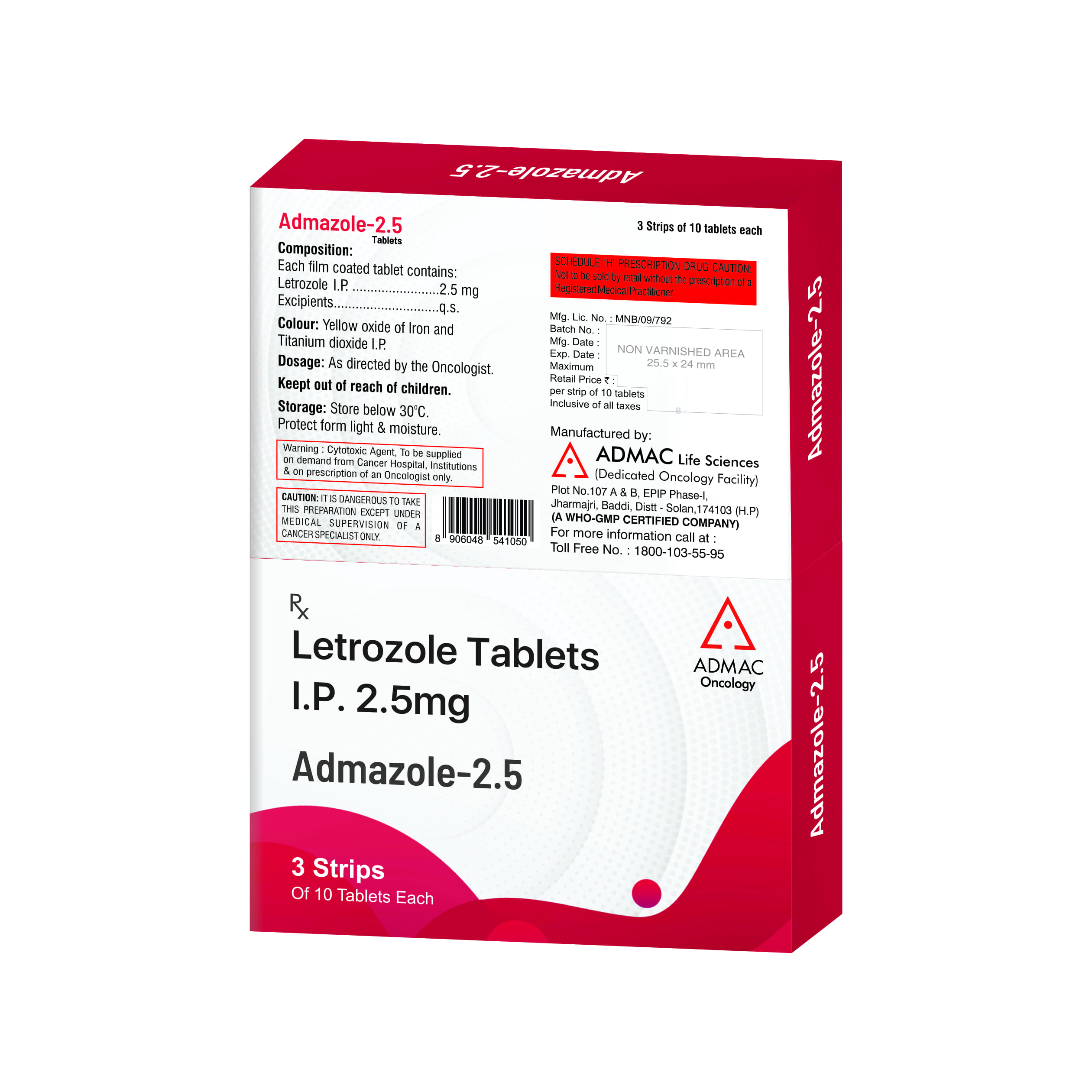
Admazole 2.5 Tablets

Generic Name– Letrozole
Drug Class – Antineoplastic Agent / Aromatase Inhibitor

Letrozole is an oral hormonal therapy used primarily in the treatment of hormone receptor–positive breast cancer in postmenopausal women.
It works by inhibiting the aromatase enzyme, which is responsible for the conversion of androgens to estrogens. By reducing estrogen levels in the body, Letrozole helps slow or stop the growth of estrogen-dependent cancer cells.
Letrozole is administered orally in tablet form, usually once daily, with or without food, under the supervision of an oncologist. It may also be used as adjuvant therapy, extended adjuvant therapy, or in cases of advanced or metastatic breast cancer.
Common side effects include hot flashes, fatigue, joint pain, nausea, dizziness, and increased cholesterol levels. Bone density monitoring is recommended during long-term treatment.

Dosage:Available in 2.5 mg tablets

Category: Oral Tablet

Category:

Indications & Usage

Dydrogesterone is indicated for:

  • Prevention of natural abortion in adult patients who have a history of habitual abortions (Threatened or Recurrent Miscarriage)
  • Treatment option for patients with dysmenorrhea (severe and frequent menstrual cramps and pain during the period)
  • Treatment of endometriosis, a condition with abdominal pain and menstrual irregularities as common symptoms

Clinical Efficacy

  • First clinical treatment choice due to its the good oral bioavailability and lesser risk of developing breast or endometrial cancer compared to other progestagens
  • Shown to have significant improvements in pelvic pain, dysmenorrhea and dyspareunia, and a high level of satisfaction in the post-laparoscopic in women with endometriosis
  • More effective than conservative treatment in maintaining pregnancy in women with threatened miscarriage
  • Effectively improves hormone levels and related cellular immune factors in recurrent spontaneous abortion (RSA) patients
  • Regularize menstrual-cycle in women with abnormal uterine bleeding – ovulatory dysfunction

Safety Information

Adverse Reactions

  • The most common adverse events that occurs after administration of dydrogesterone are vaginal hemorrhage, nausea, vomiting, migraines or headaches, abdominal pain, menstrual complaints, and breast pain or tenderness

Contraindications

  • It is contraindicated in patients with a known hypersensitivity to dydrogesterone or any other ingredient present in formulation
  • Undiagnosed vaginal bleeding
  • Treatment for luteal support as part of an Assisted Reproductive Technology (ART) treatment should be discontinued upon diagnosis of abortion/miscarriage
  • Contraindications for the use of estrogens when used in combination with dydrogesterone

Special Precautions

  • The etiology for the bleeding should be clarified before starting the dydrogesterone treatment
  • Use dydrogesterone cautiously in patients with acute liver disease or a history of liver disease, discontinuing in severe cases
  • Breakthrough bleeding and spotting in the initial months of dydrogesterone treatment may warrant investigation, including endometrial biopsy, if they persist or recur after treatment cessation
  • Close supervision is advised for patients with a history of or predisposition to porphyria, or abnormal liver function during pregnancy or previous hormone treatment, considering potential recurrence or aggravation during dydrogesterone treatment, with discontinuation as an option
  • Patients with a history of depression may require vigilant monitoring, and if severe depression reoccurs, dydrogesterone treatment should be discontinued
  • In cases of habitual or threatened abortion, confirm fetal viability and monitor ongoing pregnancy progress and embryo vitality during treatment with dydrogesterone
  • Dydrogesterone has increased metabolism with CYP enzyme inducers (e.g. rifampicin, carbamazepine, phenobarbital, phenytoin, efavirenz, nevirapine)
  • Perform regular physical exams (including breast and pelvic tests, mammograms, blood pressure monitoring and Pap smears) is advised before and during dydrogesterone treatment
  • Dydrogesterone may cause drowsiness or dizziness, especially after intake; use caution when driving or operating machinery